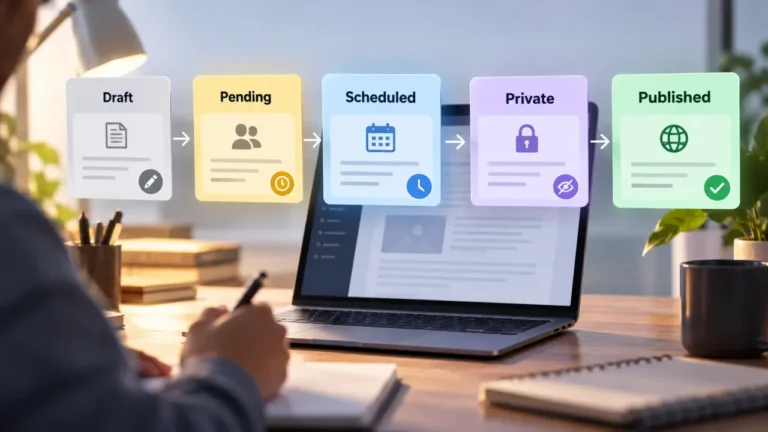


Working with freelance writers on content goes wrong at one predictable point: the handover, not the writing itself. A writer who gets a vague topic, no style guide, and no way to see how past posts were structured will turn in something that is technically finished and still needs a rewrite. The fix is not a better writer. It is a handover package, built once, that removes the guesswork before the first draft is due: a brief with the actual angle, a one-page style reference, working access to wherever the content lives, and a feedback loop that closes instead of repeating.
Why the Handover Is Where Rework Starts
Editors who manage more than two or three freelance writers tend to describe the same failure pattern: everything works fine at small scale, then falls apart once the roster grows. A quick email and a shared Google Doc get you through your first couple of writers. By the fifth or tenth, deadlines slip, brand voice drifts between posts, and drafts come back off-brief because nobody wrote down what “on-brief” meant in the first place. FreelanceWriting.com’s breakdown of editorial workflow at scale (read 2026-09-18) frames this directly: informal, ad-hoc coordination collapses once a roster passes a handful of writers, and the damage shows up as missed deadlines, inconsistent voice, and editors spending their time firefighting instead of planning.
The pattern holds whether you manage one writer or fifteen: rework does not usually start in the writing stage. It starts in whatever happened, or did not happen, before the writer opened a blank document.
What a Working Handover for Freelance Writers on Content Actually Contains
A handover that prevents rework has four parts, and skipping any one of them reliably reappears as a revision round later.
The brief: specific enough to remove guesswork
A brief that lists only a keyword and a word count is not a brief, it is a placeholder. A brief that actually works names the angle, the reader’s starting question, the internal links to include, the competing pages it needs to beat, and what “done” looks like. Zapier’s guide to finding and working with freelance writers (read 2026-09-18) makes the same point about clarity up front: the stronger the brief, the less back-and-forth an editor spends after the draft lands, because ambiguity resolved before writing is cheaper than ambiguity resolved after.
The style guide: one page, not a wiki
Freelance writers rotate in and out of multiple clients in the same week. They will not read a forty-page brand book before every assignment, and holding them to one they never saw is not fair to them or productive for you. A workable editorial style guide for a blog fits on one page: preferred terms, banned phrases, formatting conventions, and two or three example paragraphs that show the voice rather than describe it. That single page does more to prevent voice drift across a roster of writers than any amount of after-the-fact editing.
CMS access: the step editors skip and then regret
This is the part of the handover that gets treated as an afterthought and causes the most avoidable delay. If a freelance writer cannot log in, format their own draft, add their own links, or preview the post the way it will actually appear, every draft has to pass through a second set of hands before it is usable, and that second set of hands is usually the editor’s. Before adding a new writer, it is worth running the same test the site would apply to any new CMS: can a non-developer actually publish on this in about an hour? If the honest answer is no, the platform, not the writer, is the bottleneck, and it is worth checking whether the setup actually needs a developer to keep running before assuming the current system is fixed in place.
The feedback loop: closed, not open-ended
A handover is not finished when the first draft is approved. It is finished when the writer knows what changed between the draft and the published version, and why. Feedback that says “this needs work” produces another round of guessing. Feedback that says “the intro buried the answer three paragraphs in, move it to the first sentence” produces a writer who stops making that mistake.
The Access Problem Nobody Plans For Until It Costs Them a Week
Most editors plan the brief and skip the platform question, right up until a freelancer spends two days locked out of a staging environment or formatting a draft in a Google Doc that then has to be manually rebuilt in the CMS. If the site already runs on WordPress and it works for the team writing on it, that is often reason enough to stay put rather than chase a migration; see the case for staying on WordPress before treating a platform switch as the fix for a workflow problem that a better handover would also solve.
Setting Up Feedback So Mistakes Don’t Repeat
A revision round should answer one question for the writer: what pattern caused this, not just what line needs fixing. Three habits keep feedback from becoming a repeating cost:
- Comment on the pattern, not just the sentence. “You buried the direct answer” travels to the next ten articles. “Change this sentence” does not.
- Separate structural notes from line edits. A writer who gets both mixed together in one long comment thread tends to fix the visible typo and miss the structural issue, because the structural note was three paragraphs down.
- Confirm the fix landed before the next assignment goes out. Sending a new brief before confirming the last round of feedback was understood just compounds the same mistake across two drafts instead of one.
The editorial workflow research cited above breaks the process into ideation, writing, editing, and approval as separate stages with their own owners. The editing stage is where a feedback loop either closes or turns into a second writing pass, and that is usually the stage that gets compressed first when deadlines slip, which is exactly backwards.
Turnaround Times: Agree Them, Don’t Assume Them
A surprising share of freelance friction has nothing to do with quality and everything to do with mismatched expectations about time. An editor who assumes a draft arrives in a few days and a writer who assumes a week are both being reasonable, and both are wrong about each other, because neither number was ever written down. The fix belongs in the brief, not in a follow-up email: state the draft deadline, state how long the writer should expect to wait for the first round of feedback, and state how many revision rounds are included before the scope changes. None of this needs to be the same number for every site or every writer. It needs to be a number both sides saw before the assignment started. Where a brief is silent on turnaround, both sides quietly default to their own assumption, and the gap between those two assumptions is where a perfectly good draft starts to feel late even though nobody actually missed anything.
A Handover Checklist You Can Reuse
Before sending a topic to a freelance writer, confirm each of these exists and is current, not written once and forgotten:
- A brief with the angle, reader question, and required internal links, not just a keyword.
- A one-page style guide with example paragraphs, not a full brand document.
- Working CMS access the writer has actually tested, not just been granted.
- A named point of contact for questions during the draft, not a shared inbox.
- A feedback template that separates structural notes from line edits.
- A record of what changed between draft and publish, so the next brief can reference it.
None of these six items require new software. They require deciding, once, what the handover contains, and then actually handing that same package to every writer instead of reconstructing it from memory each time.
FAQ
How many freelance writers can one editor manage with an informal process?
Most editors can hold an informal system, an email thread and a shared document, together for two or three writers. Beyond that, the coordination overhead of tracking who has which brief and which draft is at which stage tends to outweigh the effort of writing down a repeatable handover once.
What should a freelance writer brief include that most briefs leave out?
The reader’s starting question and the specific internal links to include are the two most commonly missing pieces. A keyword and a word count tell a writer what to write about, not what the piece needs to accomplish or where it connects to the rest of the site.
Should freelance writers get direct CMS access or submit drafts as documents?
Direct access, where the platform allows it, removes a manual reformatting step that otherwise falls on the editor for every single draft. Where the CMS genuinely cannot support that without a developer on standby, document submission with a clear formatting template is the fallback, not the default.
How specific should feedback be to prevent the same mistake next time?
Specific enough to name the pattern, not just the instance. Feedback that identifies why a paragraph did not work travels to the writer’s next several assignments; feedback that only marks the line to change does not.
Does a style guide replace the need to edit freelance drafts?
No. A style guide reduces how much editing is needed and what kind, mainly voice and formatting drift, but it does not replace judgment on structure, accuracy, or whether the piece actually answers the brief.